
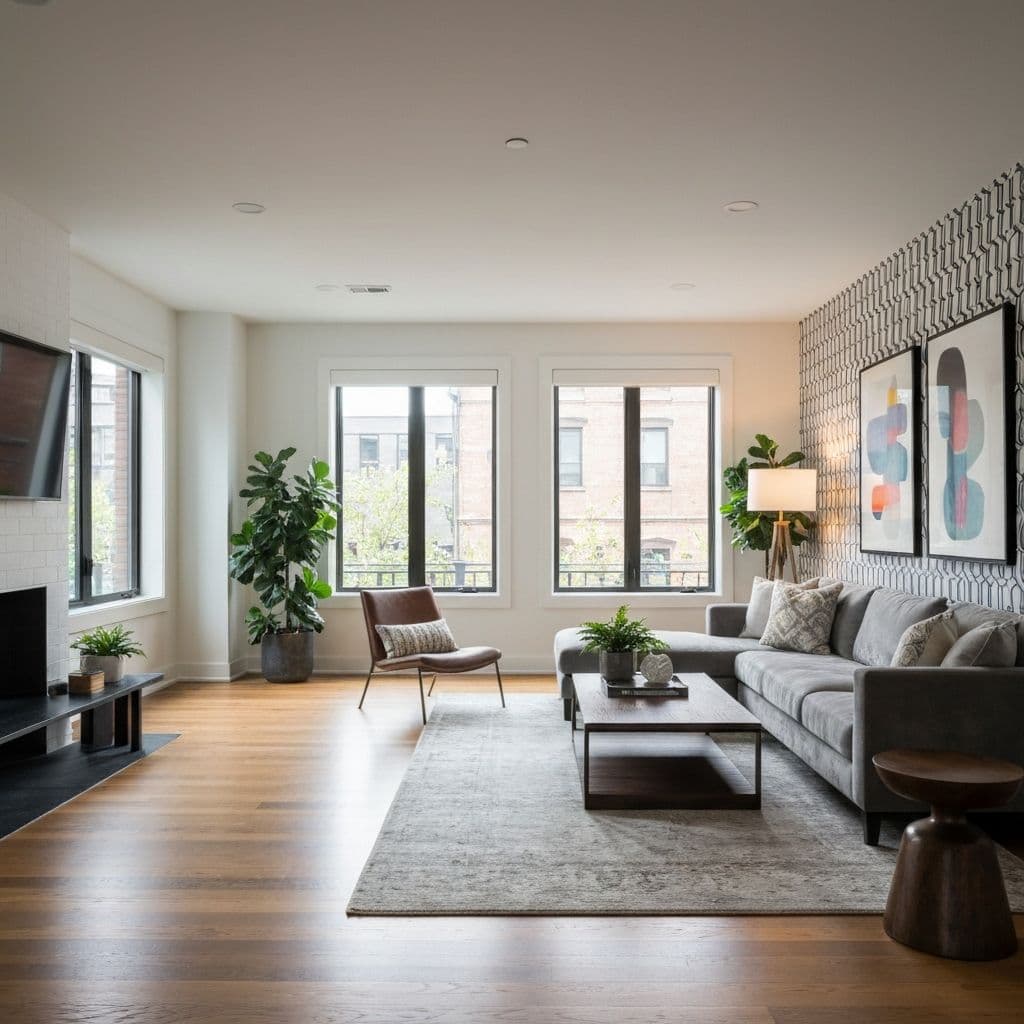
This comparison looks at FLUX.2 Pro and Nano Banana Pro as model families. In BuntuSpaces today, customers can choose Flux or Nano Banana 2 on every plan. Here's how the two approaches differ — and where each shines.
Different by design
The most important thing to understand is that these two models were built around fundamentally different goals. FLUX.2 Pro was optimised for aesthetic output — it produces images with cinematic depth, rich lighting, and a painterly sense of realism that can feel genuinely artistic. Nano Banana Pro, built on the Gemini 3 architecture, went a different direction: it prioritises logical accuracy, structural consistency, and faithful instruction-following.
In practice, that difference shows up immediately. FLUX.2 Pro tends to produce outputs that feel alive — the mood, the atmosphere, the way light falls across a surface. Nano Banana Pro produces outputs that are precise — a chair stays a chair, text in the image is legible, and whatever you asked for in the prompt is what you get.
Where FLUX.2 Pro leads
For design work that's intended to impress — mood boards, client presentations, concept pitches — FLUX.2 Pro is hard to beat. When a homeowner wants to see their living room reimagined in a coastal style, the model delivers something that genuinely looks like a photograph of the finished space. The colour palette, the material quality, the sense of depth — it all hangs together in a way that feels intentional rather than generated.
It's also fast. FLUX.2 Pro generates 2K resolution outputs in under ten seconds, and supports images up to 4MP — which matters when you're iterating quickly through design variants or running multiple transformations in a session.
Where Nano Banana Pro leads
Nano Banana Pro earns its place when the work requires precision. Text elements in the image are rendered accurately — if your scene calls for a sign, a label, or a printed fabric pattern, Nano Banana handles it with consistency that FLUX.2 can struggle to match. Identity preservation is another strength: faces, objects, and spatial relationships stay coherent across variations.
It's also particularly well-suited for advertising and social-ready content — scenarios where the output needs to match a brief to the letter rather than interpret it with creative latitude. If your prompt says "warm-toned Scandinavian kitchen with open shelving and a brass tap," Nano Banana Pro delivers that specification. FLUX.2 might give you something more beautiful but slightly different.
How we think about the choice
There's no universal winner here, and that's intentional. We offer both models because different moments in a design workflow call for different tools. Early-stage exploration — where you want to be surprised, to see possibilities you hadn't imagined — is FLUX.2 territory. Later-stage refinement, where you're converging on a specific look and need the output to match your direction closely, is where Nano Banana Pro pulls its weight.
The simplest framing: if you're asking "what could this space be?", reach for FLUX.2 Pro. If you're asking "can you render exactly what I've described?", Nano Banana Pro is the answer.
Both models are moving fast
Both were released in late 2025 and both have already seen improvements. The gap between aesthetic quality and logical precision is narrowing as these models mature — but for now, the distinction is real and worth understanding before you pick your generation settings.
We'll keep both available in BuntuSpaces and will update model options as newer versions ship. If you want to go deeper on the technical side-by-side, the team at Artlist published a detailed comparison worth reading.